Coconut
Cocos nucifera, Fam. Arecaceae
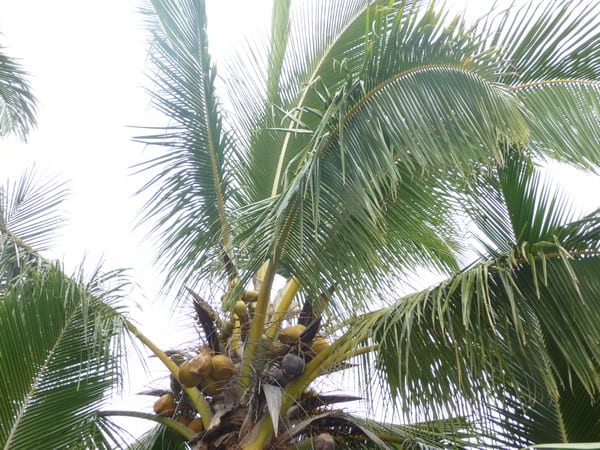
A solitary palm to 30m with a stout trunk, particularly at base.
| Weed Category: |
Other invasive plants Invasive plants that are not prohibited or restricted invasive plants, but are known to spread readily and cause negative impacts, within the region.
|
| Weed: | Yes |
| Form or habit: | Palm or palm-like plant |
| Family: | Arecaceae |
| Leaf: | Compound Whorled Large pinnate arching fronds to 6m long with numerous leaflets. |
| Flower conspicuous: | Conspicuous |
| Flower colour: |
Yellow, Cream |
| Flower description: | Three-petalled cream to yellow, about 12mm long, borne in large axillary sprays. |
| Fruit conspicuous: | Conspicuous |
| Fruit colour: |
Brown, Green, Orange, Yellow |
| Fruit: | Fleshy |
| Fruit description: | Large drupes rarely less than 200mm, green, yellow-orange and finally brown with fibrous husk surrounding one 80-100mm long ‘nut’. |
| Habitat: | |
| Distribution | |
| Food source for: | |
| Toxicity: | No toxicity known |
| Origin: | Probably Pacific & Indian Ocean islands, now Pantropic |
| Notes: | Spread by: water, including ocean currents, indiscriminately dumped fruit, gravity. Invades: coastal areas, destabilising dune systems. Notes: historically, widely planted on islands and coastal areas; still being used in amenity plantings. They have many economic uses but naturalised populations can become serious environmental weeds. Over time, unattended plants produce expansive populations with a thick ground layer of fallen fronds and fruit. Falling coconuts may also be a safety hazard. Environmental weed. |
| Information sources: | Mackay Regional Pest Management Group (2018) Weeds of the Mackay Whitsunday Region Second Edition. |