Castor oil plant
Ricinus communis, Fam. Euphorbiaceae
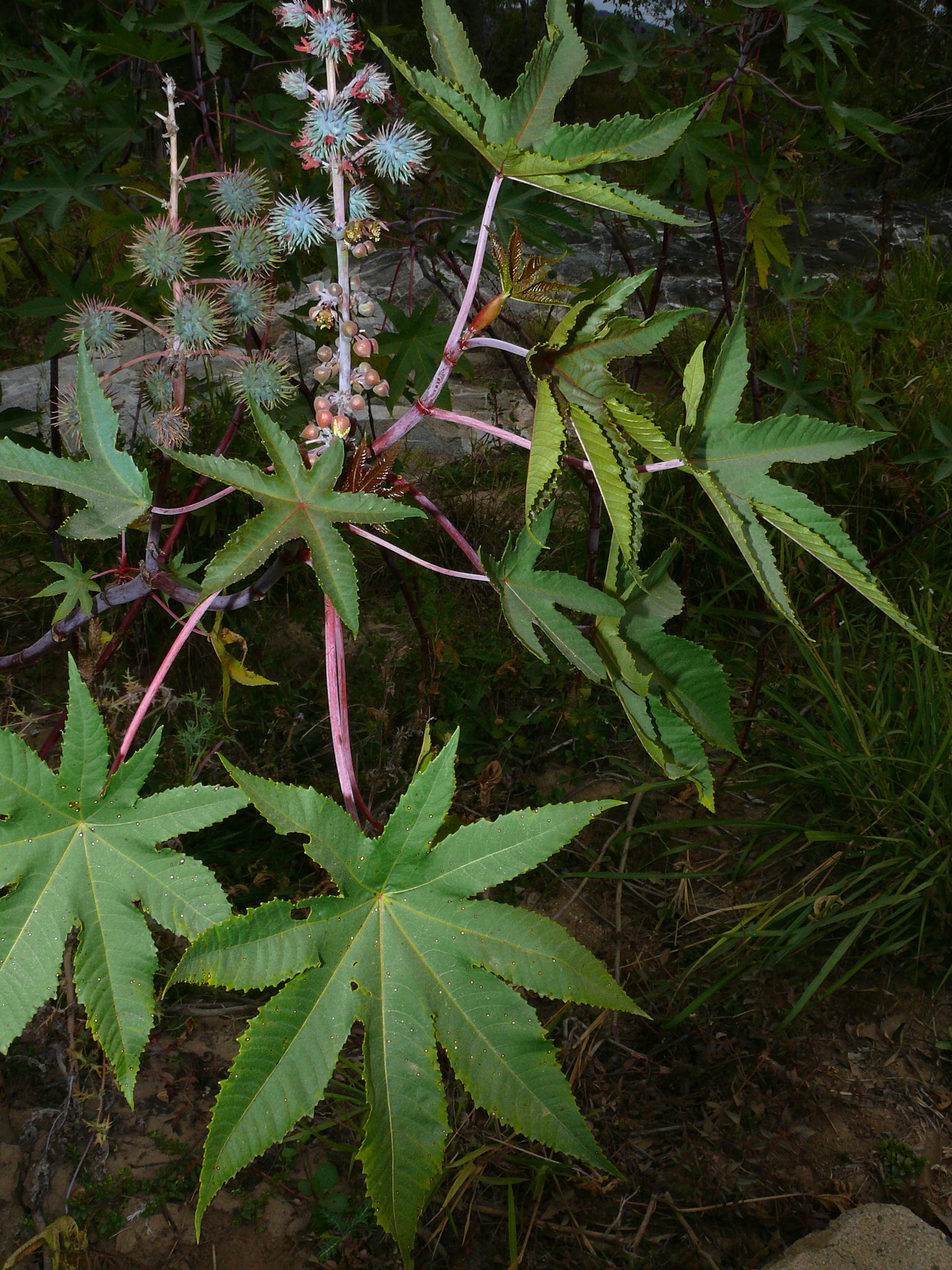
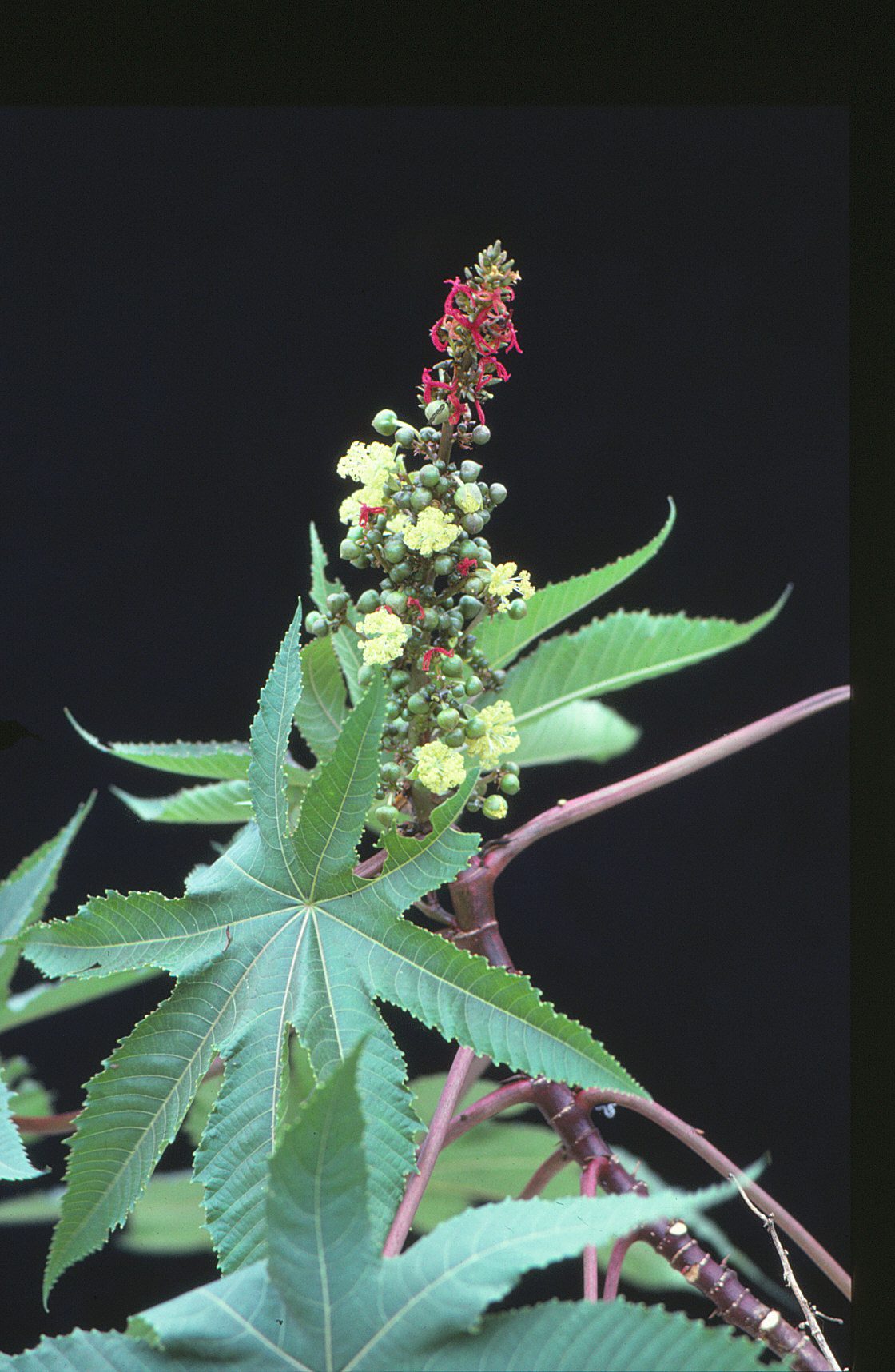
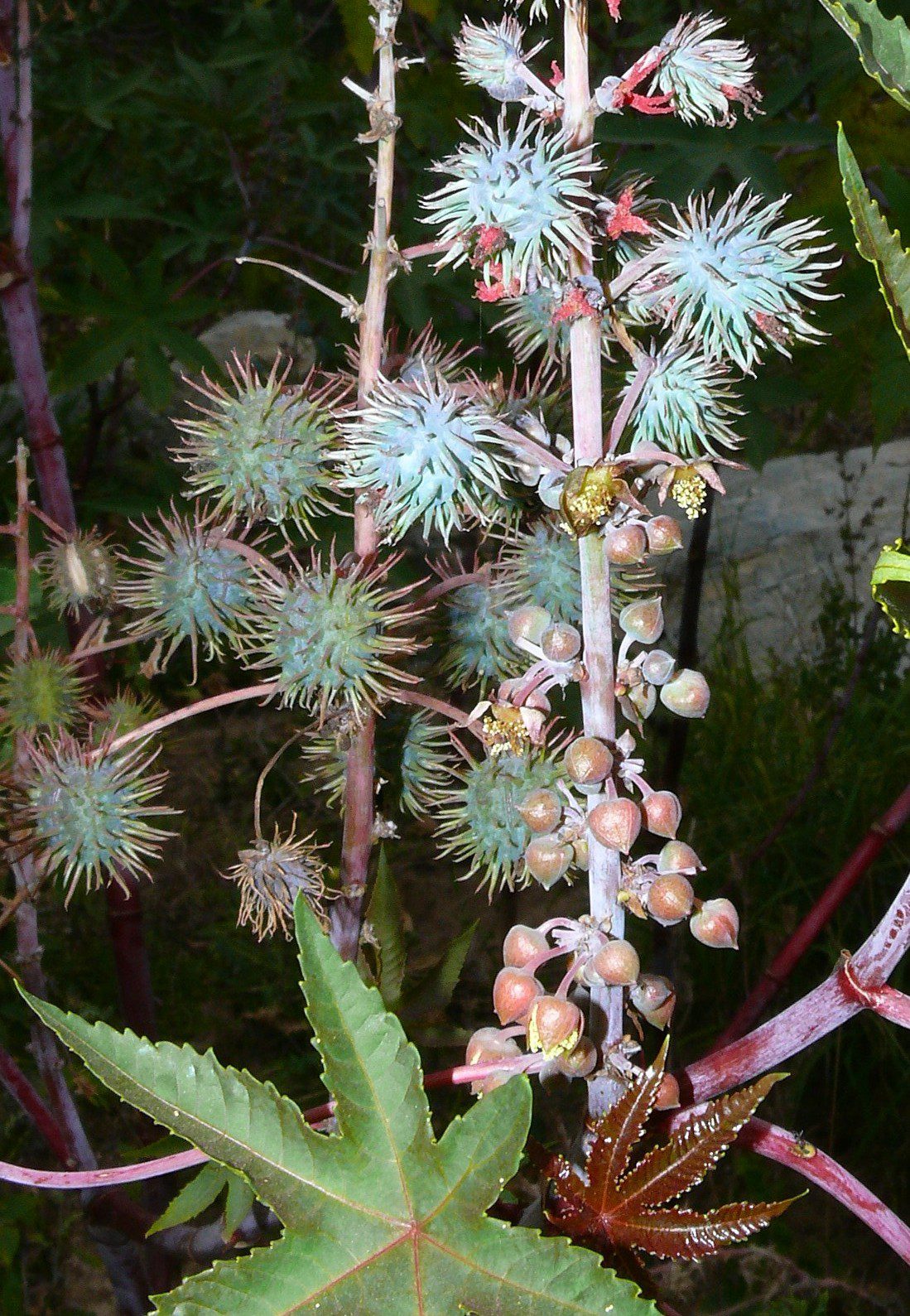
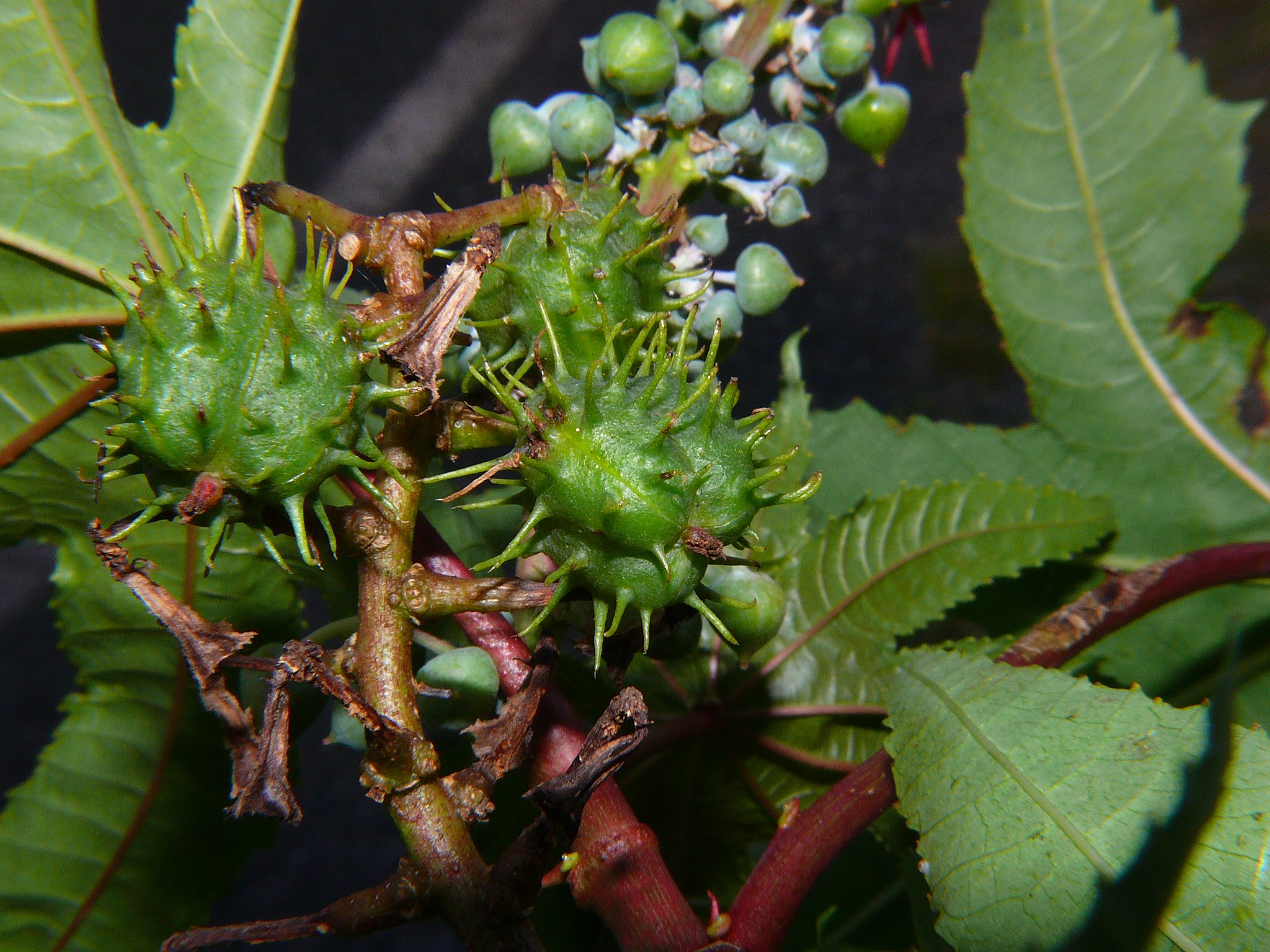
Perennial many-branched sub-shrub to 3m. Stems hollow, glabrous, pale dull green, sometimes with reddish tinge.
| Weed Category: |
Locally Declared Plants Under the Local Law provision of the Local Government Act 1993, Local Government may declare a weed specifically for their Council area and enforce their control.
|
| Weed: | Yes |
| Form or habit: | Shrub |
| Family: | Euphorbiaceae |
| Leaf: | Simple Alternate Simple, alternate, about 300mm in diameter, deeply palmately divided into 7-10 finely toothed lobes that radiate from the stout, hollow 100-300mm long stalk. Young leaves glossy reddish-brown, becoming green on maturity. Crushed leaves have an objectionable smell. |
| Flower conspicuous: | Conspicuous |
| Flower colour: |
Yellow, Cream |
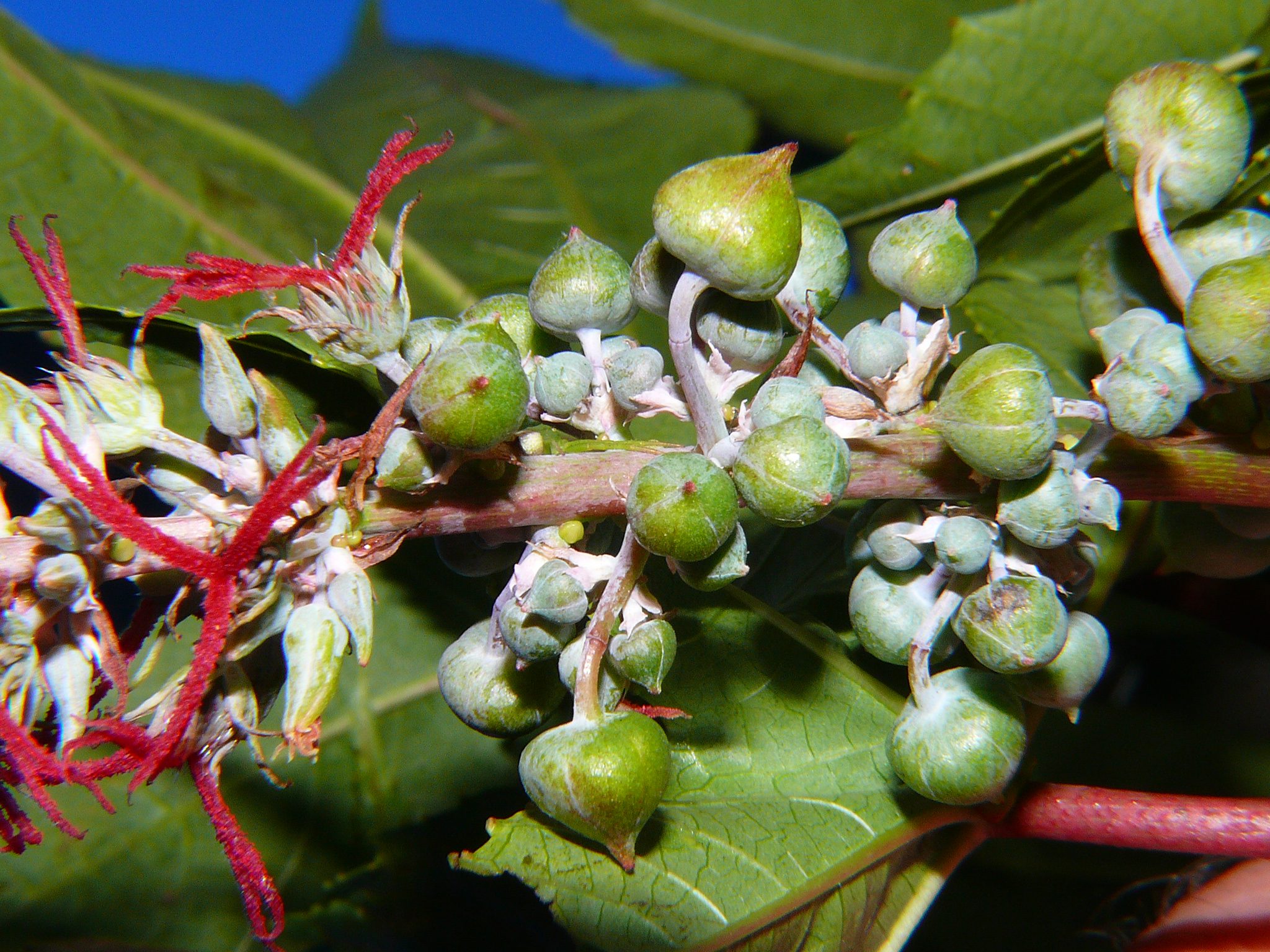
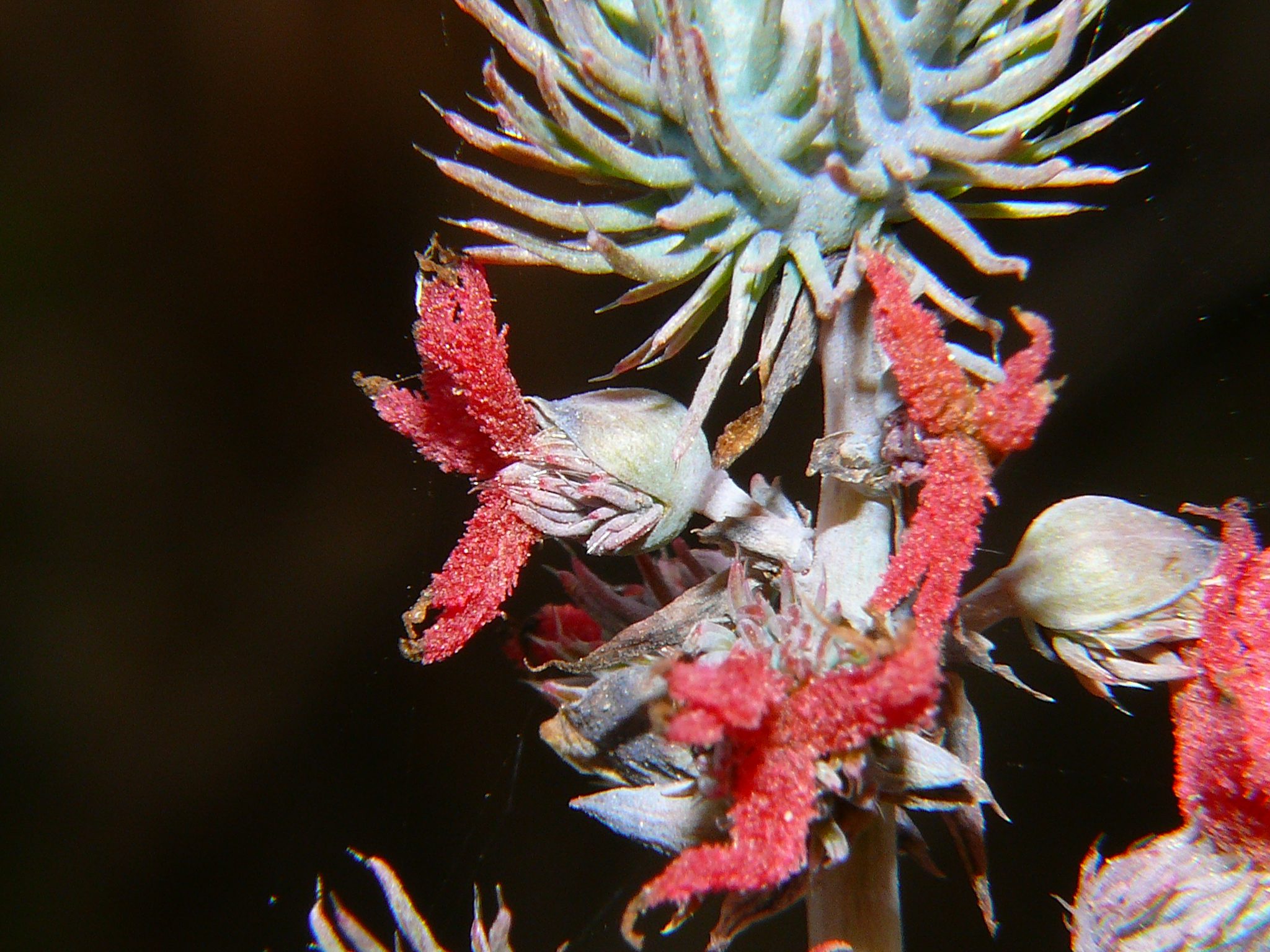
| Flower description: | About 10mm in diameter, crowded on long stout erect spikes. Fluffy cream or yellow flowers are male, flowers with conspicuous feathery red styles are female. |
| Fruit conspicuous: | Conspicuous |
| Fruit colour: |
Green |
| Fruit: | Fleshy |
| Fruit description: | Greenish, fleshy, egg-shaped 3-valved capsules, 20-30mm across, covered with soft green or red spines and containing 3 smooth mottled black and fawn seeds, about 10mm long. |
| Habitat: | |
| Distribution | |
| Food source for: | |
| Toxicity: | Toxic if ingested, potential allergen, irritant sap, toxic or irritant to domestic pets, toxic to native animals |
| Origin: | Africa and Asia |
| Notes: | Spread by: seeds explosively ejected some distance from the parent plant at maturity; also water, contaminated soil and garden waste. Invades/threats: creek banks, neglected areas and roadsides. Capable of forming dense populations. Notes: widespread, large colonies throughout the region. Poisonous: plants can cause respiratory and eye irritation; seeds extremely toxic and can be lethal to both humans and stock. Castor oil produced from seeds is used medicinally and in industry. |
| Information sources: | Mackay Regional Pest Management Group (2018) Weeds of the Mackay Whitsunday Region Second Edition. |